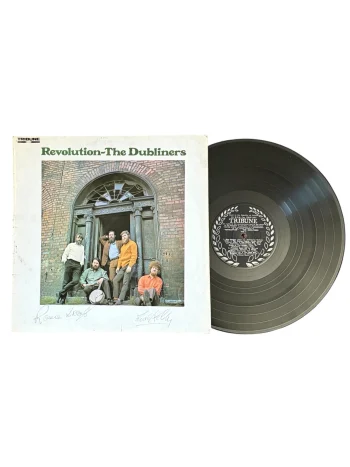
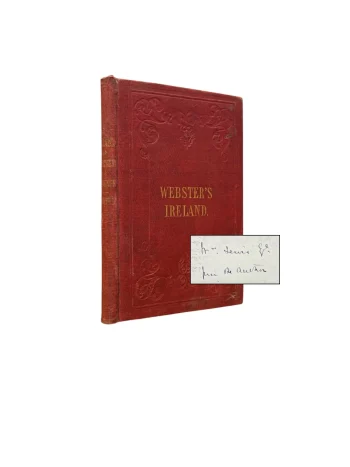
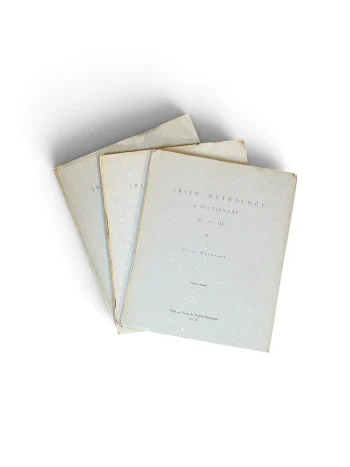
For many collectors, sporting memorabilia offers something that even the finest history book cannot: a direct physical connection with a person, a match or a moment that has entered sporting history.
A book signed by a legendary player, a programme autographed after a famous final, a photograph signed by members of a championship-winning team, or a piece of correspondence written by a celebrated sportsman can transform an interesting object into something unique.
But what makes one piece of signed sports memorabilia considerably more desirable than another?
As with rare books, the answer usually lies in a combination of importance, rarity, authenticity, provenance and association.
Signed Sports Books
Signed sporting books are an interesting collecting field in their own right.
Autobiographies and biographies naturally account for a large proportion of the market, but collectors should distinguish between books produced in large signed editions and genuinely scarce signed copies.
A modern autobiography signed at numerous promotional events may be desirable, but it is unlikely to have the scarcity of an earlier book signed by a sporting figure whose autograph is seldom encountered.
First editions are generally preferable, particularly when signed close to the time of publication.
The inscription can also make an enormous difference.
A simple signature is one thing. A presentation inscription from a famous player to a teammate, manager, journalist or another important sporting personality is something quite different. The latter has an association and history unique to that particular copy.
The Importance of the Sporting Figure
The identity of the person signing an item is naturally one of the principal factors determining its desirability.
The greatest names transcend their individual sports. Muhammad Ali, Pelé, George Best, Jack Nicklaus and other sporting icons attract collectors far beyond the countries or clubs with which they are most closely associated.
The same principle applies to Irish sporting history.
Items connected with legendary GAA players, Irish rugby internationals, celebrated footballers, Olympians, boxers and other figures can have considerable appeal, particularly when associated with an important period in their careers.
Death can also affect scarcity. Once a sporting figure has died, the number of genuine signatures is permanently fixed. In the case of figures who died young or rarely signed material, genuinely authentic examples can be particularly difficult to obtain.
The Event Can Matter as Much as the Signature
One of the most important distinctions in sports collecting is between an item that happens to be signed by a famous person and an item directly connected with an important event.
Consider the difference between a modern photograph signed by members of a famous team and an original programme from the final they won, signed by the players who participated.
Both may be desirable.
But the second object has an additional historical connection.
Programmes, tickets, photographs, menus, invitations and other ephemeral items associated with major sporting occasions can become particularly important when signed by participants.
All-Ireland Finals, international rugby matches, European fixtures, Olympic Games, World Cups and other landmark events provide an obvious historical context.
The closer the relationship between the object, the signer and the event, the stronger the piece can become.
Team-Signed Material
Items signed by an entire team have a particular appeal.
Completeness is important.
A programme containing three or four signatures from a championship-winning side may be interesting, but one signed by the entire starting team – particularly around the date of the event – belongs in another category.
Collectors should look carefully at precisely who has signed the item.
Are the major players present? Is the captain included? The manager? Are there signatures from substitutes or other members of the squad?
Identifying each autograph can turn what initially appears to be a collection of signatures into a much more significant historical object.
Provenance: Where Did It Come From?
With signed sports memorabilia, provenance can be every bit as important as the autograph.
A compelling story is useful. A documented story is considerably better.
An item that has descended through the family of a player, official or participant immediately has an interesting history. Original correspondence, photographs, receipts, inscriptions and other documentation can strengthen that provenance further.
Modern certificates of authenticity can be useful, particularly when issued by recognised authentication companies or connected to witnessed signings. However, a certificate should never be treated as automatically establishing the importance of an item. The reputation of the issuer and the connection between the certificate and the specific object need to be considered. Recognised authentication services commonly use serial numbers, holograms and databases to provide a verifiable link between an autograph and its certification.
Older material is different.
A programme signed in the dressing room after an All-Ireland Final in the 1930s is unlikely to have a modern authentication sticker. Its provenance may instead depend upon where it came from, contemporary inscriptions, comparison with known signatures and the history of ownership.
For important historical memorabilia, that wider evidence can be extremely significant.
Association Copies and Presentation Pieces
Some of the most desirable sporting items are those that connect two important people.
A book presented by a celebrated player to his manager, a photograph inscribed to a teammate, or an autobiography presented to a sporting rival has what collectors call association.
These pieces tell a story beyond the autograph itself.
The same applies to presentations made to players following important matches, tours or championship victories. Cups, medals, menus, photographs and commemorative objects can all acquire additional significance when their original recipient can be identified.
In such cases, provenance is not merely reassurance that an object is genuine. It forms part of the history of the object itself.
Match-Worn and Game-Used Material
Collectors should also distinguish carefully between signed, match-worn, game-used, player-issued and ordinary commercially produced memorabilia.
These terms are not interchangeable.
A signed replica jersey can be perfectly genuine and collectable, but it should not be described as match-worn unless there is convincing evidence that it was actually worn by the player in competition.
For significant game-used material, establishing the history of the object is particularly important. Authentication of the signature and authentication of the object itself are two separate questions.
A jersey demonstrably worn during an important match and subsequently signed by the player may be considerably more desirable than an identical retail jersey bearing the same autograph.
Again, context matters.
Condition and Presentation
Condition always plays a role, although collectors of historical sports memorabilia sometimes need to take a pragmatic view.
An old programme may have been folded and carried in a spectator’s pocket. A photograph might show signs of handling. A ticket may have been torn on admission.
Such characteristics are not necessarily undesirable. Indeed, they can be entirely consistent with the history of the object.
The important question is whether the condition is appropriate and whether anything materially affects the signature, image or historical integrity of the piece.
Signatures should also be protected from prolonged exposure to direct sunlight, which can cause ink to fade over time.
What Makes Signed Sports Memorabilia Valuable?
There is no single formula, but several questions are worth asking:
Who signed it?
How scarce is the signature?
What exactly is the object?
Is it contemporary with the athlete’s career?
Is it connected with an important match, championship or achievement?
Is the inscription significant?
Who originally owned it?
Can its provenance be established?
Is it unique, or were thousands of similar signed items produced?
These questions help explain why two objects carrying precisely the same autograph can have dramatically different values.
A mass-produced photograph signed at a commercial event and an original 50-year-old photograph inscribed by the same player to a teammate both contain genuine signatures. As historical objects, however, they are fundamentally different.
Collect the Story, Not Just the Signature
The best signed sports memorabilia does more than confirm that a famous person once held a pen.
It captures a connection.
The most memorable pieces can connect the athlete to the object, the object to an event, and sometimes one important sporting figure to another.
That is why provenance, association and historical context matter so much.
At De Búrca Rare Books, we have handled signed books, photographs, programmes, manuscripts and sporting memorabilia relating to important figures and events in Irish and international sporting history.
For collectors, our advice is simple: look beyond the signature.
A great autograph is desirable. A great autograph on the right object, with the right provenance and an important story behind it, can become a genuine piece of sporting history.