What makes an Irish book rare? It is a question we are frequently asked, and the answer is rarely as simple as the age of the book.
A book printed in Dublin in the eighteenth century may still be relatively easy to obtain, while a modest pamphlet published little more than a century ago might survive in only a handful of copies. In the world of rare Irish books, age is only one consideration. Scarcity, edition, condition, provenance, association and historical importance can all determine whether a book is genuinely rare – and whether collectors are prepared to compete for it.
For anyone interested in collecting Irish books, understanding these distinctions is one of the pleasures of building a collection.
- Scarcity: How Many Copies Survive?
True rarity begins with scarcity.
The number of copies originally printed is important, but the number that survive today is often far more significant. A book may have been printed in several thousand copies, but wars, political upheaval, damp, fire, neglect and simple everyday use can dramatically reduce the surviving population.
This is particularly relevant to Irish history.
Pamphlets, proclamations, political tracts, ballads, programmes and other ephemeral publications were generally produced to be read and discarded rather than preserved. Material relating to the 1798 Rebellion, Easter Rising, War of Independence and Irish Civil War can therefore be considerably rarer than its relatively recent date might suggest.
The absence of copies from libraries and the international book trade can sometimes tell us more about rarity than the date printed on the title page.
- First Editions and First Issues
Not every edition of a famous book has the same significance.
Collectors traditionally place particular importance on the first edition – the book as it first appeared before the public. Within a first edition there can also be different impressions, issues or states, sometimes distinguished by surprisingly small changes to the text, binding or title page.
Irish literature provides some of the most celebrated examples.
First editions by James Joyce, W.B. Yeats, Samuel Beckett, Oscar Wilde, Flann O’Brien and Seamus Heaney occupy an established place in the international rare-book market. For major works, identifying the correct edition and issue can make an enormous difference to both desirability and value.
A later edition may still be collectible, particularly if beautifully bound or signed, but it is generally the earliest appearance of an important work that attracts the greatest attention.
- Condition Matters
Two copies of precisely the same book can have dramatically different values.
Condition is one of the principal reasons.
Collectors generally favour books that remain as close as possible to their original state. Original cloth, wrappers, bindings and dust jackets are particularly desirable. A copy that has survived for a century untouched can sometimes be much more appealing than one that has been extensively restored.
Dust jackets are especially important for twentieth-century literature. They were designed as disposable protection and were frequently discarded. Consequently, an important Irish first edition retaining its original dust jacket can be considerably scarcer – and more valuable – than the book without it.
Minor wear is expected in old books. Indeed, sympathetic evidence of age can form part of their character. What matters is understanding what is original, what has been altered and how a particular copy compares with others that survive.
- Provenance: Who Owned the Book?
Sometimes the most interesting thing about a book is not who wrote it, but who owned it.
Provenance – the history of ownership – can transform the significance of an individual copy.
A relatively common book from the library of an important Irish writer, revolutionary, politician or historical figure may become an exceptional association item. Bookplates, inscriptions, annotations, correspondence and other evidence can establish this history.
The strongest provenance does more than attach a famous name to a book. It tells a story.
A volume owned and annotated by someone directly connected with its subject has an historical importance that another copy of the same edition simply cannot possess.
For collectors of Irish historical books and manuscripts, provenance is often one of the most fascinating areas of research.
- Signed, Inscribed and Presentation Copies
Not all signed books are equal.
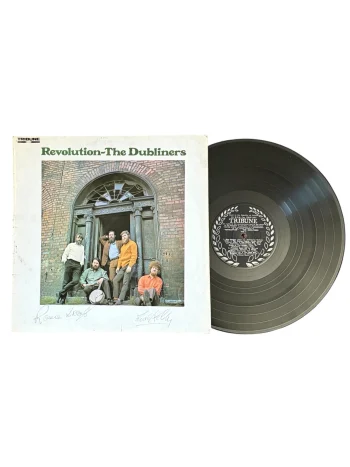
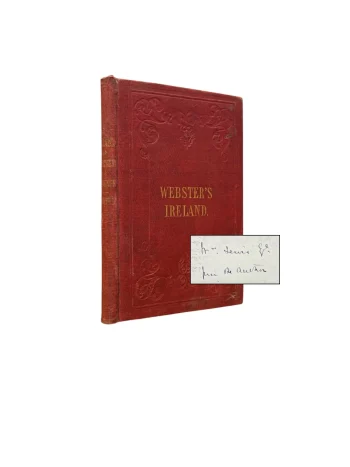
A simple author’s signature is desirable, but an inscribed presentation copy can be considerably more important.
The crucial question is: to whom was the book presented?
A book inscribed by an author to a close friend, fellow writer, political colleague or someone who influenced the work creates a direct connection between two people. Such copies are generally described as association copies.
Imagine, for example, the difference between an ordinary signed book by an important Irish author and a copy personally presented to another major literary figure. The printed text is identical, but the historical significance of the individual copy is entirely different.
These connections are among the reasons that exceptional presentation copies of Irish literary first editions can command substantial premiums.
- Historical Importance
Rarity and importance frequently intersect.
Ireland’s turbulent political, cultural and literary history produced an extraordinary quantity of printed material: proclamations, speeches, newspapers, revolutionary pamphlets, election literature, privately printed works, sporting programmes and countless pieces of ephemera.
Much of this material was never intended to survive.
A fragile pamphlet produced during a revolutionary period may today provide direct evidence of an event that changed Irish history. An apparently ordinary letter may contain an eyewitness account unavailable elsewhere.
This is where antiquarian bookselling moves beyond simply collecting old books. The object itself becomes a primary historical source.
- Irish Bindings and the Book as an Object
Sometimes rarity lies in the physical book rather than the printed text.
Ireland has a distinguished history of bookbinding, particularly during the eighteenth century. Fine Dublin bindings, often executed in calf or morocco and decorated with distinctive gilt tooling, are collected internationally.
Two copies of the same eighteenth-century publication might therefore have very different significance. One may survive in an ordinary contemporary binding; another might represent an exceptional example of the Dublin bookbinding tradition.
Bindings, bookplates, annotations and other physical characteristics remind us that every old book has had an individual life.
Rare Does Not Always Mean Valuable
This is perhaps the most important lesson for anyone beginning to collect rare books.
Rarity alone does not guarantee value.
A book might survive in only three known copies, but if nobody wants to own it, its commercial value may remain modest. Conversely, a famous first edition may survive in hundreds of copies but command a substantial price because demand from collectors greatly exceeds the number of good copies available.
Value therefore depends upon the intersection of scarcity and demand.
Literary significance, historical importance, condition, provenance and fashion within the collecting world all influence that demand.
This explains why identifying a genuinely valuable rare book requires considerably more than simply searching for the title online.
How Do You Know If an Irish Book Is Rare?
Research is essential.
Professional booksellers examine bibliographies, library catalogues, auction records and institutional holdings to establish how frequently a book appears and how many copies are known.
But experience is equally important.
After handling thousands of books, manuscripts and pieces of Irish historical material, patterns begin to emerge. Certain books that appear common in library catalogues are surprisingly difficult to obtain commercially. Others described as “rare” regularly appear at auction.
There is an important distinction between institutional rarity and market rarity.
For a collector, both matter.
Building a Collection of Rare Irish Books
A good collection does not necessarily begin with the most expensive books.
Some of the most interesting collections are built around a clearly defined subject: an Irish writer, county, historical event, political movement, sporting tradition or particular period of Irish printing.
A collector might concentrate on Irish first editions, books relating to the Easter Rising, early Dublin printing, the literature of Northern Ireland, Irish travel, GAA history or the work of a single author such as Yeats, Joyce, Beckett or Heaney.
Over time, individual books begin to relate to one another. What started as a shelf of interesting volumes becomes a coherent collection documenting a particular aspect of Irish history or culture.
That is ultimately one of the great attractions of collecting.
More Than an Old Book
The rarest and most desirable Irish books often combine several qualities at once.
A significant first edition may also retain its original binding. It may have been presented by the author to someone important. It might contain annotations revealing previously unknown information. Perhaps only a handful of comparable copies survive.
At that point, we are no longer dealing simply with an old book.
We are dealing with an individual historical object – something that has survived decades or centuries and carries within it a tangible connection to Ireland’s literary, political and cultural past.
And very often, that story is what makes an Irish book truly rare.